
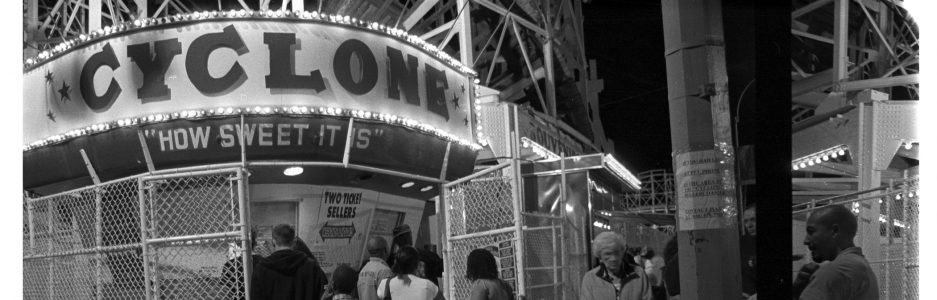

On Sunday, May 10th at 2 p.m.(ish) I left my apartment for a 2.23-mile walk to (and from) Bed-Stuy (formally Bedford-Stuyvestant) to honor Ahmaud Arbery, a 25-year-old man murdered on February 23, in his own neighborhood of Satilla Shores, Georgia.
Travis McMichael and his father Gregory McMichael followed (menaced) Arbery; Travis shot (murdered) Arbery after a brief confrontation. It wouldn’t be professional, as a former journalist, to call the accused names, but these fucking assholes claimed they stalked Arbery because he “matched” the description of a known burglar in the neighborhood–no burglaries were reported in Santilla Shores.
I was invited to this walk by my friend Tim, the man behind Punk Rope. From Tim’s email to our group:
Jason Vaughn, Arbery’s high school football coach, is asking
supporters to honor Ahmaud by going for a run of 2.23 miles. 2.23
represents the date of Ahmaud’s death which was 2/23. He asks that
runners document their run and post it to social media under the
hashtag #IRunWithMaud.
Participants are encouraged to wear a white T-shirt as that’s what Ahmaud was wearing when he was killed.
If the meeting time, place, and location are not convenient for you, but the cause still resonates, I hope you can do a run or walk at another time to show your support.
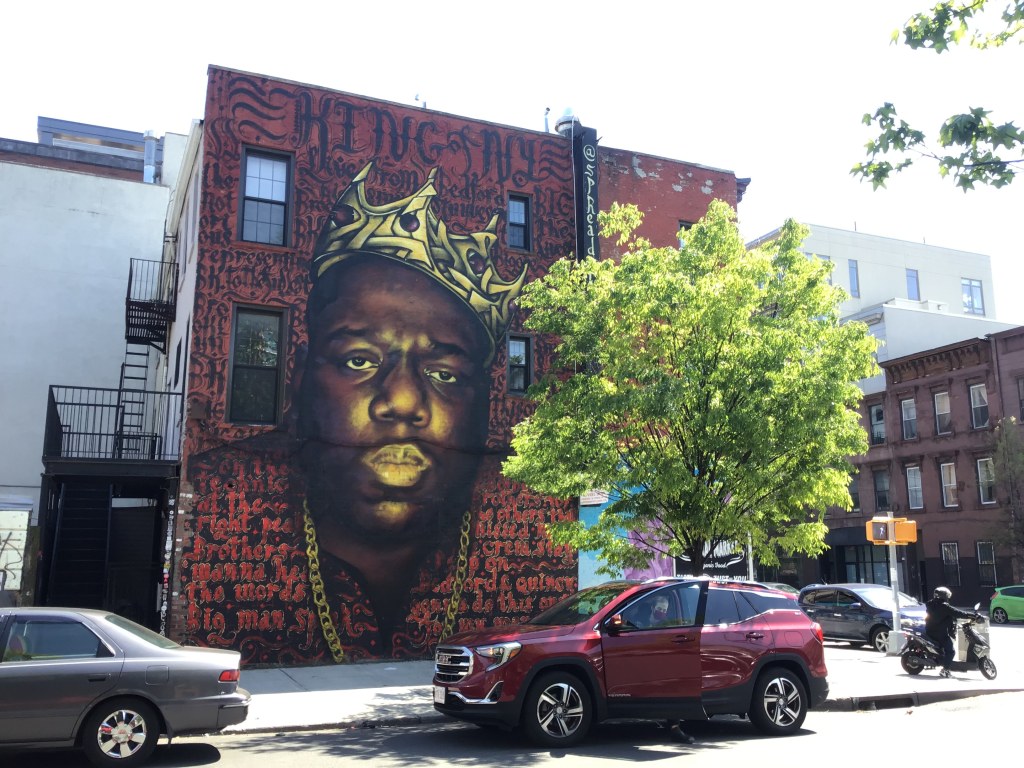
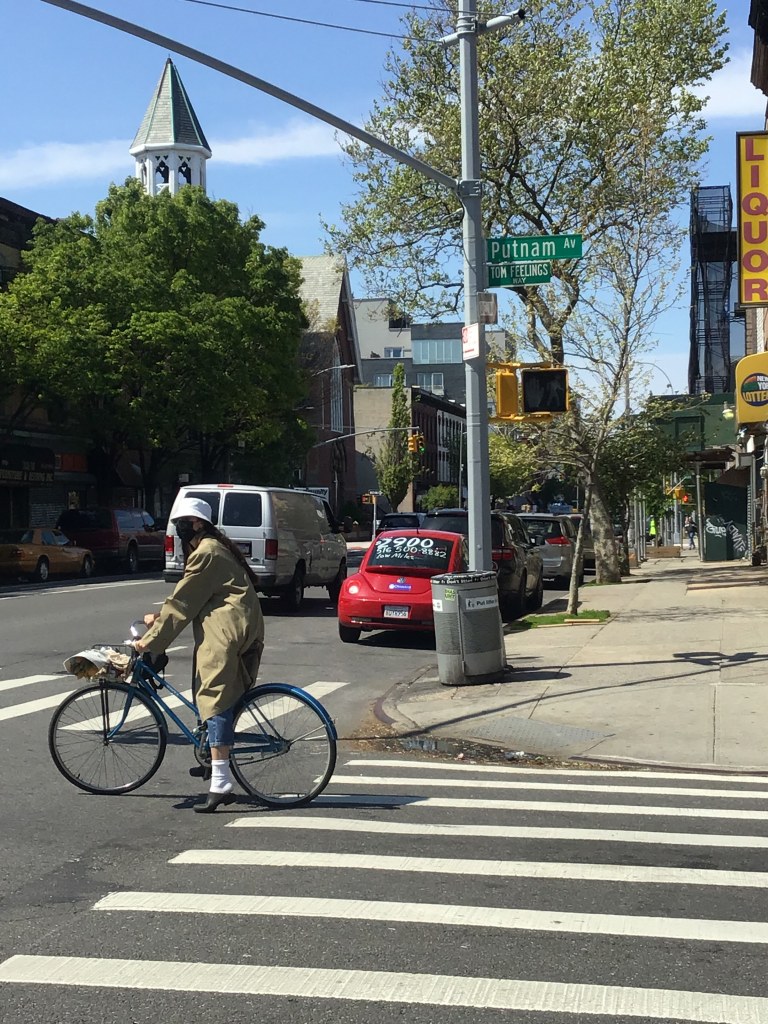
I couldn’t figure out how to get to the area safely from my own, I “joined” them in my own neighborhood, Crown Heights, and walked on Bedford Avenue to the corner of Lafayette Avenue. Crown Heights and Bed-Stuy are historically black neighborhoods. Both neighbor Weeksville, the first free African-American community in the United States, which was founded in 1838. Following the construction of the A/C line, Blacks moved to Bed-Stuy from Harlem for its “greater housing ability” in 1936. Today Bed-Stuy is heralded for its many Victorian homes and as a center of African-American arts. Its notable residents include The Notorious B.I.G., Jay-Z, Shirley Chisholm, June Jordan, Chris Rock (whose sitcom, Everybody Hates Chris is set in the neighborhood), Frank McCourt, Tracy Morgan (whose comedy The Last O.G. is set and was preliminary filmed in the neighborhood) and illustrator Tom Feelings, who has a span of Putnam Avenue co-named in his honor between Bedford and Nostrand Avenues.
Ahmaud joins a pantheon of Black men murdered by their neighbors in recent years, including Trayvon Martin, who was shot by George Zimmerman in Martin’s father’s neighborhood of Twin Lake, Florida. Martin and Ahmaud were both followed by an overly eager “neighbors” who took the “law” into their own hands, fatally, and saw practically no consequences, legally, to their actions.
Arbery’s killing reminded me of Yusef Hawkins, Michael Griffith, and Willie Turks.
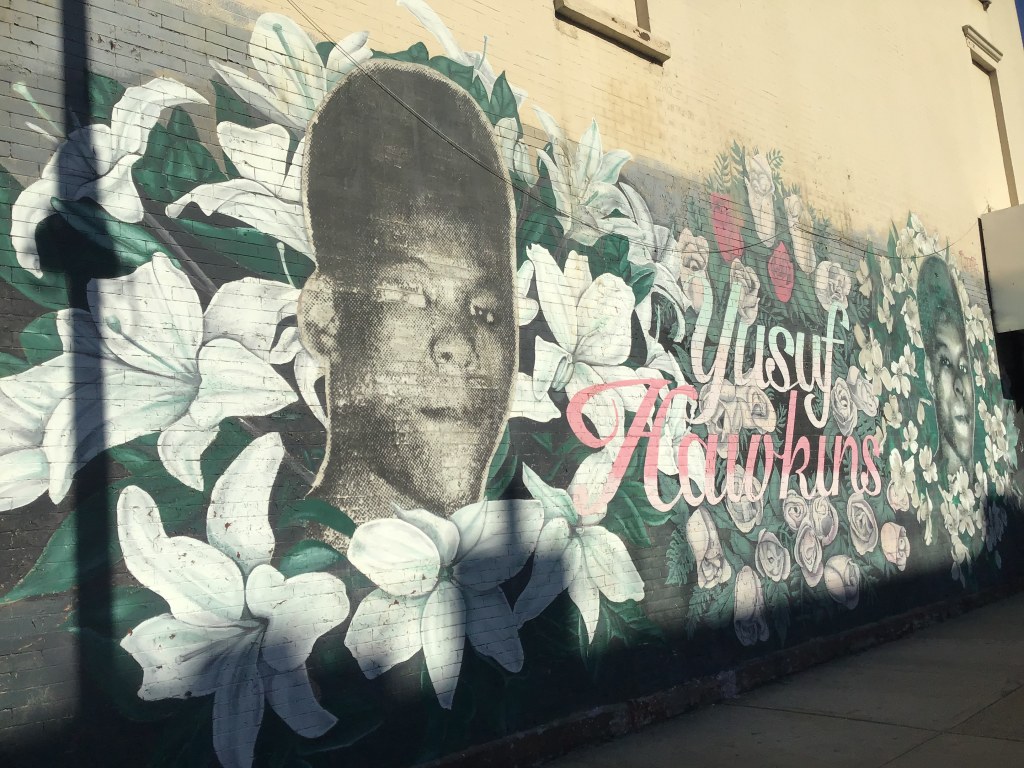
Yusef Hawkins, 16, was murdered in Bensonhurst, Brooklyn. He was shot by Joseph Fama, who was convicted of second-degree murder. Keith Mondello, John Vento, and Joseph Serrano were convicted on lesser charges. Hawkins was attacked in 1989 by a mob of youths who were lying in wait for the teen, who had ventured to the South Brooklyn neighborhood to look at a used car. There is a memorial mural on Verona Place in Bed-Stuy for Hawkins, who resided in East New York, Brooklyn.
Michael Griffith, 23, died in 1986 in Howard Beach, Queens. A resident of Crown Heights, Brooklyn, Griffith and three friends attempted to find help after their car broke down near Broad Channel. (A fourth friend stayed with the car.) Griffith and his friends had a verbal spat with a group of white teens who beat the group. In an effort to escape, Griffith ran to Belt Parkway. He was hit by 24-year-old motorist Dominick Blum, who did not remain at the scene and was not indicted. Jon Lester, Scott Kern, and Jason Ladone were indicted with second-degree murder. Because witnesses refused to comply, these indictments were dismissed. The teens were eventually found guilty of second-degree manslaughter and sentenced between six and 30 years in prison. They were released from prison between 2000 and 2002. Lester died in 2007.
A span of Pacific Avenue in Crown Heights was renamed Michael Griffith Street in 1999. It runs between Ralph and Albany Avenues.
Willie Turks was a 34-year-old MTA employee (a “car maintenance man”). He was beaten to death in 1982 by a mob of 15-20 white men primarily in their 20s, though investigators said it was largely instigated by Paul Mormonda and Gino Bova, both 17 at the time. The teens yelled slurs at Turks and his coworkers, Dennis Dixon and Donald Cooper. The three men had recently left a McDonalds, followed by a nearby deli for bagels and beer. Dixon drove the three men away in his station wagon, but when his car stalled, a mob of white teens dragged him from behind the wheel. Cooper was chased from the scene by a mob of twelve white men in their 20s, who approached from a schoolyard; he managed to escape and flag down an officer. Another dragged Turks from the car and beat him to death. The group scattered when the officer arrived, but by then Turks was lying in the intersection with a fractured skull. The Far Rockaways resident died in Kings County Hospital that night. Bova was convicted of lesser charges and acquitted of second-degree murder and first-degree manslaughter; he was sentenced to five to fifteen years. Mormonda and three others were sentenced for lesser crimes as well.
The murders of the three men galvanized the city. Their deaths highlighted the inherent racism that continued to thrive in New York City, and the light sentences their murderers received further criticism. Griffith’s murder received “immediate condemnation” from then-mayor Ed Koch. Reverend Al Sharpton lead several protest marches in the wake of Hawkins’s death.
As far as I can tell, Willie Turks and Yusef Hawkins do not have streets co-named in their memory. Willie Turks doesn’t even have a Wikipedia article.
Today, Bed-Stuy is the site of gentrification and much debate about the influx of young white people. My journey passed several shuttered bars, a handful of takeout windows, and many, many French expats. I also watched a woman chase after a man’s scarf, which had blown away unbeknownst to him until she returned it.
 agirlingotham.com